How Movers Protect Furniture During Transport

A dining table can look perfectly secure in a living room and become vulnerable the moment it passes through a doorway, enters a truck, and travels hundreds of miles. That is why understanding how movers protect furniture during transport matters before an interstate move. Protection is not one blanket or one careful lift. It is a coordinated process that begins with planning and continues through room-of-choice placement at the destination.
For a long-distance relocation, furniture must be protected from scratches, pressure, shifting, moisture, vibration, and the ordinary handling required at pickup and delivery. The right approach depends on the piece itself, its material, its condition, access at both homes, and whether it has special value beyond its replacement cost.
Protection Starts Before Moving Day
Experienced movers do not treat every item the same. A solid wood armoire, a glass-top dining table, a modular sectional, and a lacquered designer console each require different handling decisions. Before loading begins, the crew should assess the inventory and identify pieces that need disassembly, extra padding, crating, or specialty preparation.
This planning is especially important for interstate moves because the furniture may be handled across multiple stages: removal from the home, loading into the truck, secure transport, unloading, and reassembly. A clear move plan accounts for stairways, elevators, tight turns, long carries, parking restrictions, and the layout of the destination. When access is difficult, the handling method must adjust before a crew starts maneuvering a large or delicate piece.
Customers can help by pointing out antiques, loose joints, existing marks, fragile surfaces, and items with sentimental or high financial value. Photographs and a condition review create a useful record before the move. They also give the moving team an opportunity to recommend a higher level of protection where appropriate.
How Movers Protect Furniture During Transport
The physical protection process typically combines surface coverage, structural preparation, careful loading, and secure tie-downs. Each layer addresses a different risk. A moving blanket may prevent a scratch, but it cannot prevent a chair from shifting if it has not been properly secured inside the truck.
Disassembly Reduces Stress on Vulnerable Parts
Many furniture pieces travel more safely when certain components are removed. Movers may take off table legs, detachable shelves, headboards, mirrors, glass inserts, and removable cushions. This reduces the chance that a narrow leg snaps under pressure or that a glass panel cracks while being carried.
Hardware should be kept together, identified, and protected so reassembly is efficient at delivery. Proper disassembly is not simply taking furniture apart as quickly as possible. It requires knowing which pieces are designed to come apart and which should remain intact. Forcing disassembly on an older antique or poorly constructed item can create more risk, not less.
Padding and Wrapping Protect Finished Surfaces
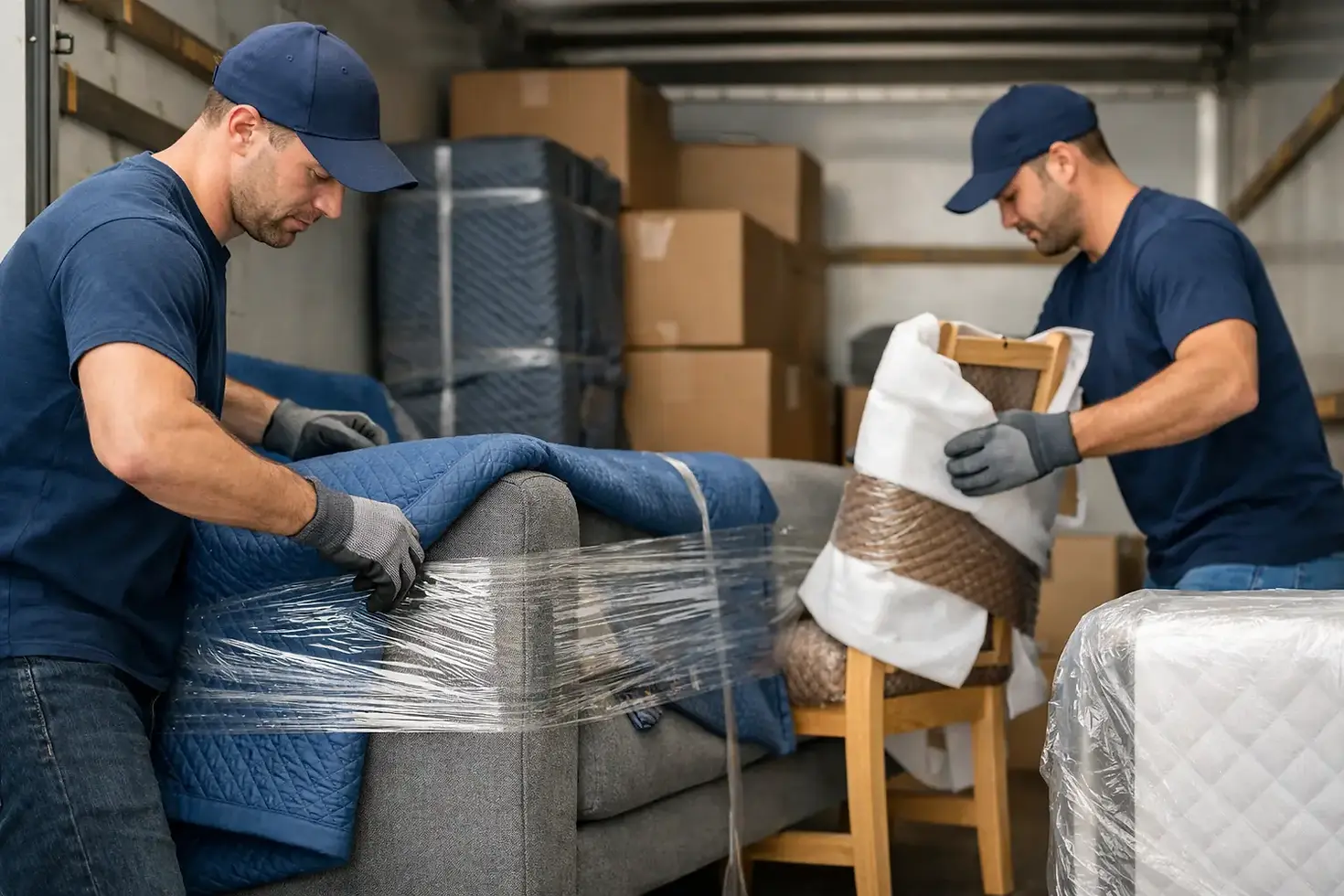
Furniture pads, moving blankets, stretch wrap, corrugated corner protection, and shrink wrap all have specific uses. Thick pads help shield wood, upholstery, and finished surfaces from contact with walls, door frames, and other items in the truck. Stretch wrap can keep pads in place and help secure drawers or doors, but it should be applied thoughtfully.
For example, direct plastic wrapping on certain wood, leather, or delicate finished surfaces may not be the best choice for an extended move, particularly where heat or moisture is a concern. A protective barrier between the furniture and outer wrap can be the safer approach. Premium furniture, high-gloss finishes, and upholstered designer pieces may require additional layers or specialized materials.
Corners and edges receive particular attention because they are most likely to encounter doorways, stair rails, truck walls, and neighboring furniture. A well-protected piece should have padding that stays in place without excessive tape or compression that could affect the finish.
Glass, Marble, and Fragile Components Need Specialized Handling
Glass tabletops, mirrors, marble tops, stone furniture, and framed artwork require a different standard than a wood dresser. These items should be protected from both surface impact and flexing. A large glass or stone panel can be damaged by a small amount of pressure in the wrong area.
Depending on the item, movers may use reinforced cardboard, custom-fit protection, mirror cartons, or a crate. The right solution depends on the value, dimensions, weight, and fragility of the piece. Crating is not necessary for every fragile item, but it can be a sensible investment for artwork, antiques, designer furniture, and unusually delicate materials traveling a long distance.
Upholstered Furniture Must Stay Clean and Supported
Sofas, chairs, mattresses, and upholstered headboards need protection against dirt, snags, moisture, and compression. Clean furniture pads or purpose-designed covers create a barrier while the piece is carried and loaded. Armrests, legs, and exposed trim need special care because they can catch on a doorway or press against another item.
Movers should also consider how upholstered pieces are positioned in the truck. A sofa placed beneath heavy freight, or squeezed into a space without adequate padding, can lose its shape or sustain frame damage. Proper loading is as important as the cover around it.
The Truck Is a Controlled Storage Space
Once furniture is wrapped, the job becomes one of load engineering. The goal is to distribute weight, prevent movement, and keep hard surfaces from rubbing together during transit. Professional crews load heavier, sturdier pieces in stable positions and build a secure tier with padding between items where needed.
Furniture is typically secured with straps or tie-down systems to limit shifting caused by braking, turns, road vibration, and uneven pavement. Loose spaces must be managed with the right materials and placement. A truck that looks full is not necessarily loaded safely. The crucial question is whether the contents are immobilized without putting damaging pressure on the furniture.
This is one reason an accurate inventory matters. If a move includes an oversized sectional, multiple dining sets, office furniture, or specialty pieces, the truck space and loading sequence must be planned accordingly. Overcrowding creates avoidable risk. So does loading valuable furniture after the truck layout has already been improvised.
Careful Carrying Protects Furniture and the Home
Transport protection begins before the truck leaves the curb. Crews should use appropriate equipment, including dollies, shoulder straps, appliance hand trucks, and floor protection when needed. These tools help control weight and reduce the risk of drops, strikes, or strain during long carries.
Door jambs, stair rails, flooring, and elevator interiors may also need protection. Careful movers think beyond the item itself. A move should not leave behind damaged walls or gouged hardwood because the route was not prepared.
For very large pieces, a team may need to remove doors, use specialized equipment, or adjust the plan. This is not an inconvenience when it prevents unnecessary force. A difficult access point is where experience makes a measurable difference.
Delivery Includes Inspection, Reassembly, and Placement
Furniture protection does not end when the truck arrives. At delivery, the crew should bring items into the requested rooms with the same controlled handling used at pickup. Pieces that were disassembled need to be reassembled correctly, and protective materials should be removed with care.
It is wise to inspect furniture as it is placed, especially valuable or fragile items. Compare its condition with the pre-move documentation and raise questions while the crew is present. If a piece has been protected correctly, the delivery process should feel organized rather than rushed.
Room-of-choice placement also reduces the temptation to drag heavy furniture across floors after the movers leave. Before the move date, decide where major pieces will go and make sure pathways are clear. A few minutes of planning at the destination can prevent a great deal of avoidable stress.
When White-Glove Protection Is Worth It
Standard professional protection is appropriate for many household moves. White-glove or specialty handling becomes more relevant when furniture has unusual value, fragile construction, difficult dimensions, or irreplaceable significance. This may include antiques, heirlooms, custom-built pieces, luxury furnishings, artwork, marble, and designer furniture with delicate finishes.
The trade-off is cost and preparation time. Specialty packing, custom crating, and added handling steps require more labor and materials. For an inexpensive, durable bookcase, that level of service may not be necessary. For a family heirloom dining table or a one-of-a-kind credenza, it may be the most practical way to manage risk across state lines.
A dependable interstate mover should explain these options clearly as part of the estimate, along with any access challenges or special requirements that could affect the move plan. At CKS Motion Group, careful protection is treated as part of the relocation process, not an afterthought once the truck is loaded.
Before choosing a mover, ask how your specific furniture will be wrapped, secured, transported, and reassembled. The most reassuring answer is not a vague promise to “be careful.” It is a clear plan that shows your belongings will be handled with precision and delivered with care.


Comments