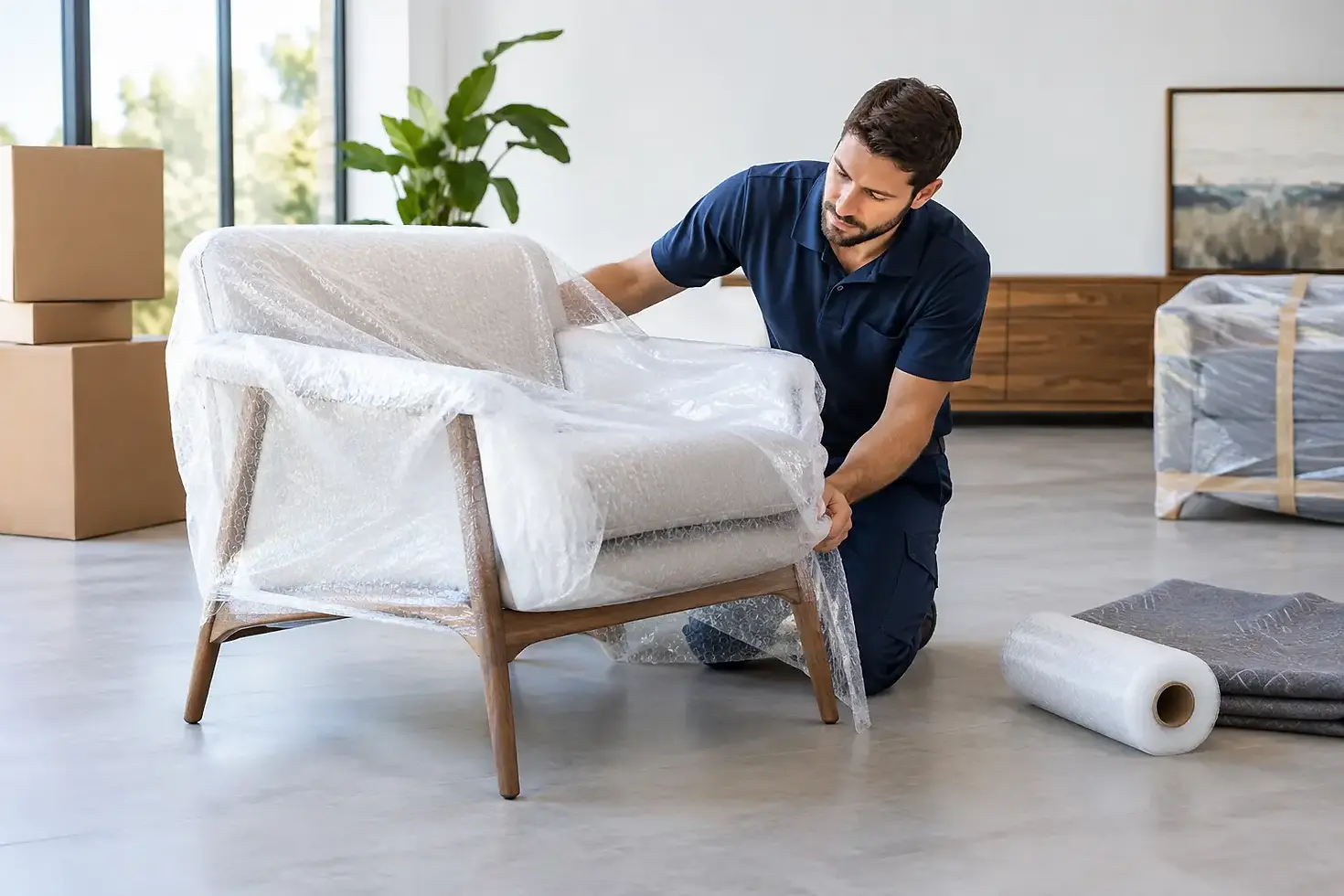
How to Pack Designer Furniture for a Long Move

A designer dining table is not simply a tabletop and four legs. It may have a hand-rubbed finish, stone inlay, custom hardware, or a silhouette that can be damaged by one poorly placed strap. Knowing how to pack designer furniture means treating every piece as a distinct item with its own materials, weak points, and handling plan - especially when it will travel across state lines.
For high-value furniture, basic moving blankets and a roll of tape are rarely enough. The goal is to prevent impact damage, surface abrasion, pressure marks, moisture exposure, and shifting inside the truck. Careful preparation also makes delivery more controlled, so each piece can be reassembled and placed in the correct room without unnecessary handling.
Start With a Piece-by-Piece Condition Review
Before anything is wrapped, inspect each item in good lighting. Photograph all sides, including corners, legs, seams, drawer faces, glass panels, and existing wear. This creates a clear condition record and helps identify areas that need added protection.
Look beyond obvious scratches. A marble console may have a fine edge chip. A lacquered cabinet may show light crazing near a hinge. An upholstered chair may have a loose button, delicate piping, or light-colored fabric that can easily transfer dirt. Note those details before the move and communicate them to the crew.
This review is also the time to decide whether an item should be disassembled. Removable legs, shelves, mirrors, glass tops, and modular sections are often safer when separated. However, not every designer piece should come apart. Furniture with aged joinery, fragile veneer, integrated wiring, or specialty hardware may be better protected and moved intact. When in doubt, follow the manufacturer’s care instructions or request a professional assessment.
How to Pack Designer Furniture With the Right Materials
The protection method should match the furniture, not the other way around. Using plastic wrap directly against polished wood, leather, or certain finishes can trap moisture and leave marks. Tape should never touch finished wood, upholstery, stone, lacquer, or leather.
A professional packing setup commonly uses clean moving pads, furniture blankets, foam sheeting, corrugated corner protectors, stretch wrap applied over padded layers, and custom crating for unusually fragile items. The sequence matters. Soft, non-abrasive material goes against the surface first. Structural protection is added next. The outer layer then holds the protection in place without contacting the finish.
For a wood credenza, start with a clean furniture pad or foam sheet, paying close attention to corners and decorative edges. Add rigid corner protection, then secure the outer padding with stretch wrap. Avoid overtightening. Excess pressure can damage delicate molding or create impressions on soft finishes.
For upholstered designer furniture, breathable protection is usually preferable to plastic against the fabric. Cover the piece with a clean pad, protect legs and arms with foam or corrugated guards, and use an outer layer that keeps the padding secure. Light upholstery requires special care during loading because truck floors, ramps, and exterior surfaces can transfer dust or moisture.
Stone, glass, and mirror components need their own plan. These materials should be removed when possible, packed vertically rather than flat, and protected with layered cushioning and rigid support. A stone top is heavy, but its edges remain vulnerable. Weight alone does not make it durable.
Disassemble Carefully and Keep Hardware Accounted For
Disassembly reduces strain on furniture and makes awkward pieces easier to maneuver through doorways, stairwells, and elevators. It also introduces risk when hardware is misplaced or components are mixed between items.
Place screws, bolts, brackets, and specialty fasteners in labeled bags. Identify the furniture piece, the room it belongs in, and the component the hardware supports. For example, label a bag “Primary Bedroom - walnut bed - left rail hardware,” rather than writing only “bed.” Secure the bag to a protected interior frame or place it in a designated hardware box that travels with the move team.
Take photos before removing complex components. This is particularly helpful for platform beds, wall systems, extendable dining tables, and furniture with concealed mounting hardware. Avoid forcing stuck pieces apart. If a component resists removal, there may be a locking mechanism, hidden fastener, or sequence required for safe disassembly.
Protect the Details Most Likely to Be Damaged
The most expensive damage often occurs at the smallest points: a carved corner, a tapered leg, a brass pull, a cane panel, or the lower edge of a drawer. Those details deserve more protection than broad, flat surfaces.
Remove loose drawers when appropriate, then wrap and protect them separately. If drawers must remain in place for structural reasons, secure them from opening without applying adhesive directly to the furniture. Doors should be stabilized as well, particularly on cabinets with glass fronts or sensitive hinges.
Legs require special attention. Long, narrow, or angled legs can snap when a piece is tilted or set down unevenly. Whenever possible, remove them and pack them separately. If they cannot be removed, build padding around the leg-to-frame connection and make sure the furniture is carried upright according to its design.
Leather, velvet, boucle, and performance fabrics each present different concerns. Leather can scuff or react poorly to trapped heat and moisture. Velvet can show pressure marks. Textured fabrics can snag. Clean pads, controlled loading, and keeping furniture away from unprotected metal edges are simple measures that protect these materials during transit.
Plan the Load Order, Not Just the Packing
Even perfectly wrapped furniture can be damaged if it is loaded in the wrong position. Designer pieces should be placed where they will not carry the weight of other items or shift against hard surfaces during transport.
Large, stable furniture is generally loaded first to create a secure base. High-value pieces should be kept upright when their construction calls for it, braced with padded material, and separated from items with sharp edges or irregular shapes. Artwork, mirrors, and glass should never be used to fill gaps between heavier belongings.
A long-distance move adds road vibration, turns, braking, and changing weather conditions. That makes load security as important as exterior padding. Professional crews use appropriate straps, bracing, and truck organization to reduce movement without placing damaging pressure on delicate frames or finishes.
Access conditions matter, too. Measure tight hallways, elevator interiors, stair landings, and door openings before moving day. A custom sofa may need to be carried at a specific angle. A heavy stone table may require additional crew members or specialty equipment. Planning this before loading prevents rushed decisions at the point where damage is most likely.
Label for Controlled Delivery and Reassembly
Clear labels protect the furniture after it arrives. Each item should be identified by room, item name, and handling needs. Labels such as “Dining Room - glass-front cabinet - keep upright” give the delivery crew useful instructions without relying on memory.
For a large residence, create a simple room map for the destination. Include final placement locations for major pieces, especially beds, dining tables, sectionals, office furniture, and built-ins that require reassembly. Room-of-choice placement reduces repeated lifting and keeps protected furniture from sitting in hallways while decisions are made.
Before the crew leaves, inspect key pieces as they are unwrapped and reassembled. Check that legs are level, doors and drawers operate correctly, and hardware is fully installed. If a piece needs acclimation after travel, such as certain wood or stone furnishings, avoid placing it immediately next to direct heat, strong sunlight, or humidity sources.
When White-Glove Service Is the Better Choice
Packing designer furniture yourself can work for a few straightforward items when you have the right materials, enough time, and safe access. It becomes less practical when the move includes antiques, oversized custom furniture, fragile stone, luxury upholstery, gallery-level artwork, or multiple pieces requiring coordinated disassembly and placement.
For those moves, white-glove service provides a higher level of control. CKS Motion Group plans specialty handling around the item, the home’s access conditions, and the delivery requirements, with professional protection, careful loading, reassembly, and room-of-choice placement built into the process.
Designer furniture deserves more than a fast wrap and a crowded truck. Give each piece the time, materials, and handling discipline it requires, and it can arrive ready to belong in its next space.


Comments